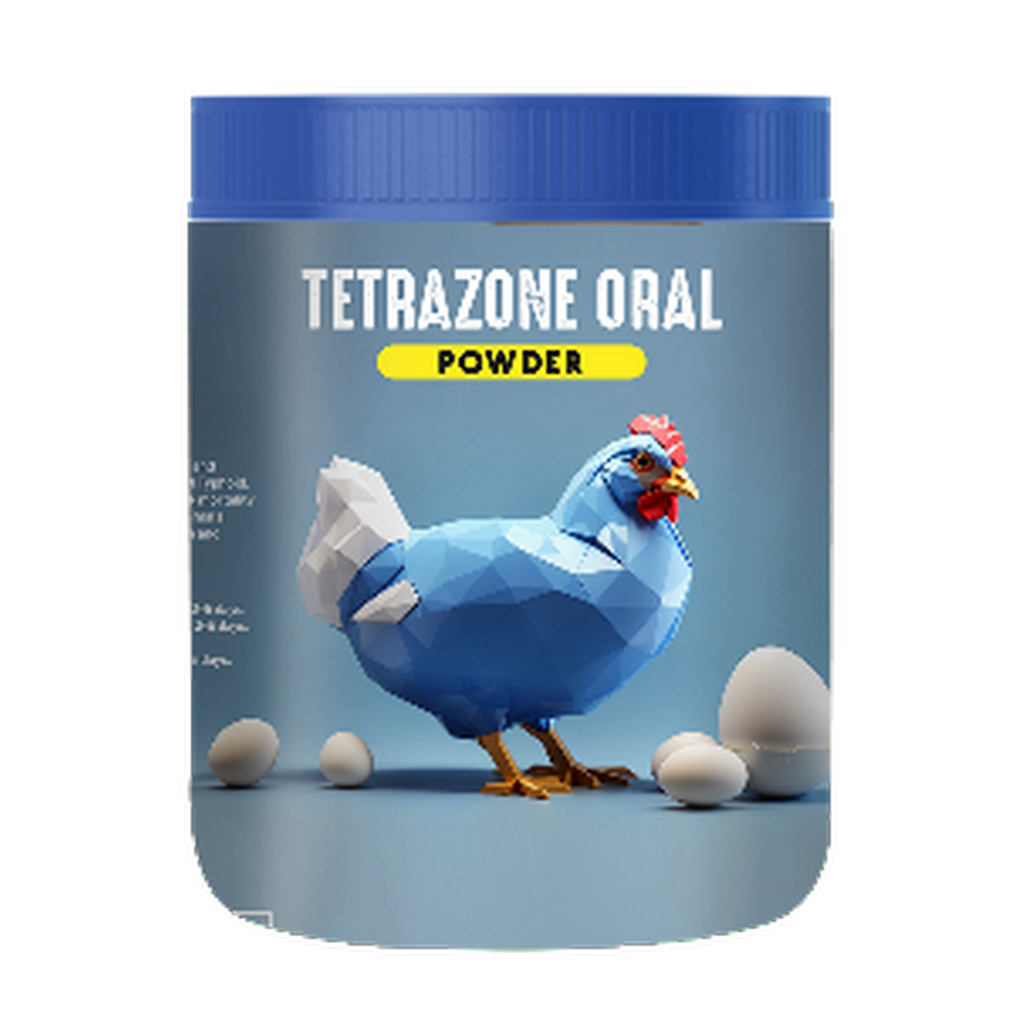
Combination antibiotic powder for poultry containing tylosin (100 mg/g), doxycycline (200 mg/g), colistin (50 mg/g), and bromhexine (5 mg/g). Provides synergistic bactericidal activity against respiratory and gastrointestinal pathogens, including Mycoplasma, E. coli, Salmonella, and Clostridium perfringens, with added mucolytic action for enhanced respiratory relief.
Product Name: TETRAZONE
Type: Oral Water-Soluble Powder - Antibiotic Combination
COMPOSITION
Each kg contains:
- Tylosin Tartrate USP ...... 100 g (10% w/w, 100 mg per gram)
- Doxycycline Hydrochloride USP ...... 200 g (20% w/w, 200 mg per gram)
- Colistin Sulfate BP ...... 50 g (5% w/w, 50 mg per gram)
- Bromhexine Hydrochloride BP ...... 5 g (0.5% w/w, 5 mg per gram)
DESCRIPTION
TETRAZONE is a broad-spectrum antibiotic combination powder containing four active ingredients: tylosin, doxycycline, colistin, and bromhexine. This synergistic formulation provides comprehensive coverage against respiratory and gastrointestinal pathogens in poultry, combining two potent antibiotics with a mucolytic agent and an additional gram-negative-specific antibiotic for maximum therapeutic efficacy
Tylosin is a macrolide antibiotic produced by Streptomyces fradiae with potent activity against gram-positive bacteria and Mycoplasma species . Doxycycline is a semi-synthetic tetracycline with broad-spectrum activity against both gram-positive and gram-negative bacteria, as well as Mycoplasma, Chlamydia, and Rickettsia . Colistin sulfate is a polymyxin antibiotic with bactericidal action specifically against gram-negative bacteria such as E. coli and Salmonella species . Bromhexine hydrochloride is a mucolytic agent that reduces mucus viscosity and enhances the penetration of antibiotics into respiratory tissues .
MECHANISM OF ACTION
Tylosin:
- Inhibits bacterial protein synthesis by binding to the 50S ribosomal subunit
- Interferes with peptidyl transferase activity, preventing peptide bond formation
- Exhibits bacteriostatic activity with bactericidal effects at higher concentrations
- Particularly effective against Mycoplasma species and gram-positive bacteria
Doxycycline:
- Inhibits bacterial protein synthesis by binding to the 30S ribosomal subunit
- Prevents the attachment of aminoacyl-tRNA to the mRNA-ribosome complex
- Exhibits bacteriostatic activity with a broad spectrum against gram-positive and gram-negative bacteria
- High affinity for lung tissue, making it particularly effective for respiratory infections
Colistin Sulfate:
- Acts as a cationic surface-active agent, binding to lipopolysaccharides in the outer membrane of gram-negative bacteria
- Displaces divalent cations (Ca²⁺, Mg²⁺), destabilizing the cell membrane
- Increases membrane permeability, leading to leakage of cellular contents and cell death
- Poorly absorbed from the gastrointestinal tract, exerting its primary effect in the gut lumen
Bromhexine:
- Acts as a mucolytic agent, reducing the viscosity of bronchial secretions
- Depolymerizes mucopolysaccharides, making sputum less viscous and easier to expectorate
- Enhances ciliary activity in the respiratory tract, facilitating clearance of infectious material
- Increases the ability of tylosin and doxycycline to penetrate into the bronchi, leading to more rapid and effective concentrations of these antimicrobials
Synergistic Combination:
- The combination of tylosin and doxycycline acts additively or synergistically, providing enhanced antimicrobial activity against Mycoplasma and mixed bacterial infections. Doxycycline inhibits protein synthesis at the 30S ribosomal subunit while tylosin acts at the 50S subunit, creating a dual-blockade effect that enhances bacterial killing
- Colistin extends the spectrum to include gram-negative enteric pathogens that are not covered by tylosin and doxycycline alone
- Bromhexine enhances antibiotic penetration into respiratory tissues and improves clinical outcomes by clearing airway obstructions
- This quadruple-action formulation provides comprehensive coverage for both respiratory and gastrointestinal infections
ANTIMICROBIAL SPECTRUM
TETRAZONE is effective against a broad range of microorganisms
Mycoplasma:
- Mycoplasma gallisepticum - chronic respiratory disease (CRD)
- Mycoplasma synoviae - infectious synovitis, respiratory disease
- Mycoplasma meleagridis - in turkeys
Gram-Positive Bacteria:
- Clostridium perfringens - necrotic enteritis
- Staphylococcus spp.
- Streptococcus spp.
- Corynebacterium spp.
Gram-Negative Bacteria:
- Escherichia coli - colibacillosis
- Salmonella spp. - salmonellosis, fowl typhoid, pullorum disease
- Pasteurella multocida - fowl cholera
- Haemophilus paragallinarum - infectious coryza
- Bordetella avium - turkey coryza
- Campylobacter spp.
- Klebsiella spp., Proteus spp.
INDICATIONS
TETRAZONE is indicated for the treatment and control of respiratory and gastrointestinal infections in poultry caused by tylosin, doxycycline, and colistin-sensitive bacteria
Disease Conditions:
- Chronic Respiratory Disease (CRD) - mycoplasmosis caused by Mycoplasma gallisepticum
- Complex Chronic Respiratory Disease (CCRD) - mixed infections involving Mycoplasma and E. coli
- Colibacillosis - E. coli infections causing airsacculitis, pericarditis, perihepatitis
- Salmonellosis - fowl typhoid, pullorum disease, paratyphoid infections
- Necrotic Enteritis - Clostridium perfringens infection
- Fowl Cholera - Pasteurella multocida infection
- Infectious Coryza - Haemophilus paragallinarum infection
- Ornithobacterium rhinotracheale (ORT) infection
- Mixed bacterial infections involving respiratory and gastrointestinal tracts
- Secondary bacterial infections associated with viral diseases (Newcastle disease, Infectious Bronchitis)
DOSAGE & ADMINISTRATION
TETRAZONE is administered via drinking water. For optimal results, fresh medicated water should be prepared daily.
Recommended Dosage:
- Poultry (Broilers, Layers, Breeders, Turkeys, Ducks, Geese): 1 g per 2-4 liters of drinking water for 3-5 consecutive days
- Alternative Dosage (body weight): 1 g per 10-20 kg body weight per day
- Treatment Duration: 3-5 consecutive days. For severe or chronic infections, up to 7 days may be required
Administration Guidelines:
- Calculate total daily water consumption based on flock size, age, and environmental temperature
- Dissolve the required amount of TETRAZONE in a small volume of water, then add to the main drinking water tank
- For use in automatic water proportioners, prepare stock solution according to manufacturer specifications
- Prepare fresh medicated water daily; discard any unused solution after 24 hours
- Ensure medicated water is the sole source of drinking water during treatment
- For best results, administer over 4-8 hours; may withhold water for 1-2 hours before treatment to encourage rapid consumption
- Do not use with bacteriostatic antibiotics that may cause antagonism (e.g., chloramphenicol)
- Avoid concurrent use with calcium, magnesium, iron, or aluminum-containing products as they may reduce doxycycline absorption
CONTRAINDICATIONS & PRECAUTIONS
- Egg production: Do not use in laying hens producing eggs for human consumption. When used, observe the recommended withdrawal period.
- Young birds: Tetracyclines may cause discoloration of teeth in young animals; use with caution in very young chicks
- Liver and kidney dysfunction: Use with caution or avoid in animals with impaired hepatic or renal function
- Hypersensitivity: Do not use in animals with known hypersensitivity to macrolides, tetracyclines, polymyxins, or bromhexine
- Sensitive species: Do not allow horses, rabbits, hamsters, guinea pigs, or ruminants access to water containing this product. Tetracyclines may cause gastrointestinal disturbances in these species
- Keep out of reach of children
- When handling the product, avoid inhalation, oral exposure, and direct contact with skin or eyes
- Store in a cool, dry place below 30°C, protected from direct sunlight
- Protect from moisture
- Use within 28 days after first opening
ADVERSE REACTIONS
- At recommended doses, the combination is generally well tolerated in poultry
- Occasional mild diarrhea may occur due to intestinal flora changes
- Discoloration of teeth in young animals with prolonged use
- Hypersensitivity reactions may occur in susceptible animals
- If adverse reactions occur, discontinue use and consult a veterinarian
DRUG INTERACTIONS
- Antagonistic: Do not use concurrently with bacteriostatic antibiotics that may cause antagonism (e.g., chloramphenicol). Concurrent administration of penicillins, cephalosporins, quinolones, and cycloserine should be avoided
- Interactions: Avoid concurrent use with calcium, magnesium, iron, aluminum, or zinc-containing products as they may reduce doxycycline absorption by forming insoluble complexes
- Antacids: Do not administer with antacids or products containing aluminum, calcium, or magnesium
- Nephrotoxic drugs: Avoid concurrent use with other nephrotoxic drugs (aminoglycosides, cephalosporins) when significant systemic absorption occurs
- Synergistic: The combination of tylosin and doxycycline is additive/synergistic; colistin extends the spectrum; bromhexine enhances respiratory tissue penetration
WITHDRAWAL PERIOD
- Meat (Poultry): 7 days
- Eggs: 8 days
- Note: Withdrawal periods may vary by country; always follow local regulatory requirements. According to published data, the withdrawal period for doxycycline-tylosin combinations is 7 days for meat and 8 days for eggs
STORAGE
- Store in a cool, dry place below 30°C
- Protect from direct sunlight and moisture
- Keep container tightly closed when not in use
- Do not freeze
Target Species: Poultry (Broilers, Layers, Breeders, Turkeys, Ducks, Geese, Quail, Pigeons)
Pack Sizes: 1 Kg HDPE container
PRODUCT SUMMARY
TETRAZONE Powder Antibiotic Tylosin tartrate USP 100g, Doxycycline HCl USP 200g, Colistin Sulphate BP 50g, Bromhexine HCl BP 5g per kg Poultry 1 Kg
FOR VETERINARY USE ONLY